
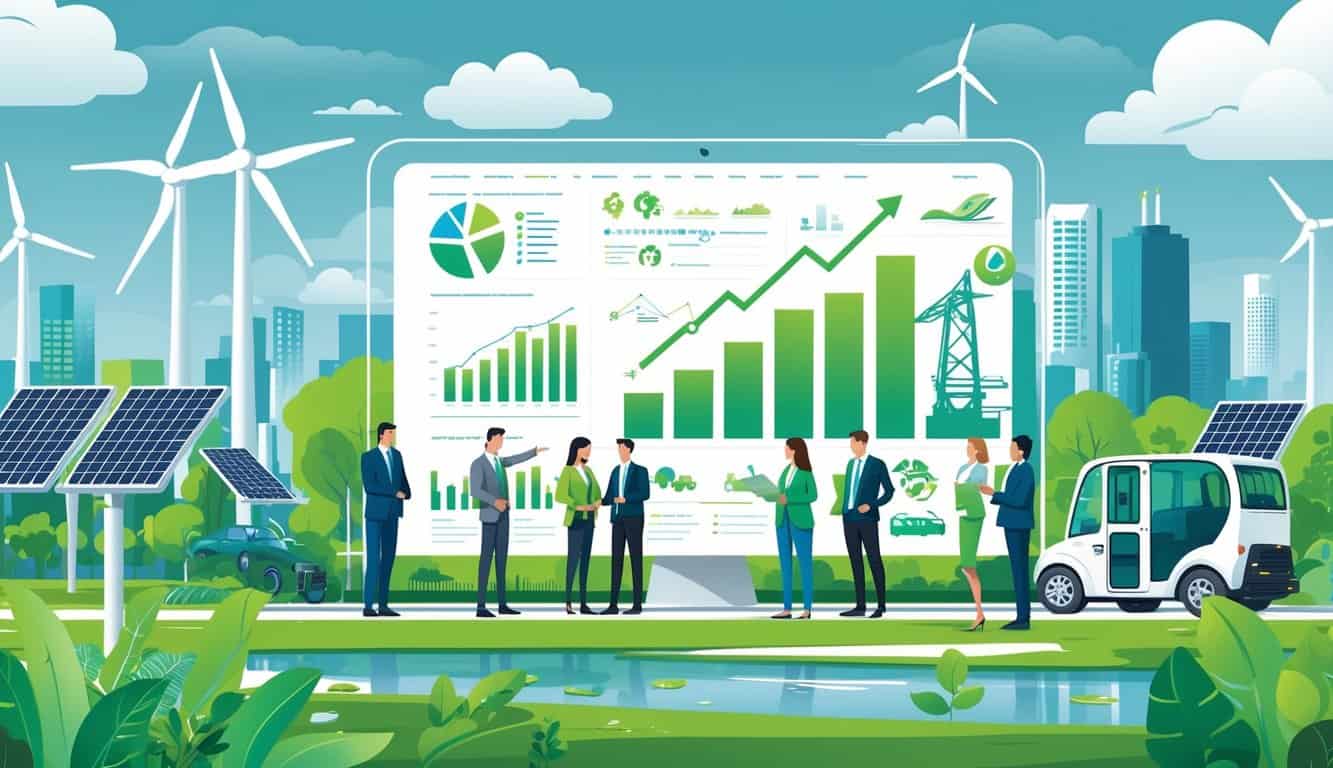
Green Financing Strategies for Sustainable Economic Growth
Green financing refers to financial activities that support projects and investments with positive environmental impacts, such as renewable energy, clean transportation, and conservation. It plays a critical role in addressing climate change by directing capital towards sustainable initiatives that reduce carbon emissions and promote environmental resilience.

This type of financing includes tools like green bonds and loans that help businesses and governments fund eco-friendly projects without compromising economic growth. As concerns about climate risks rise, green finance increasingly integrates with global efforts to meet sustainability goals and foster a more resilient future.
By mobilizing resources for clean energy and sustainable infrastructure, green financing not only benefits the planet but also creates opportunities for innovation and long-term financial stability. Understanding how it works and its potential impact is essential for anyone interested in the future of sustainable development and responsible investing. Learn more about how green finance supports environmental progress at the World Economic Forum.
Introduction to Green Financing
Green financing channels capital toward projects that yield environmental benefits, such as renewable energy and pollution reduction. It integrates financial tools with environmental criteria to support sustainable economic growth and manage ecological risks effectively.
What is Green and Sustainable Finance?
Green finance specifically targets investments that contribute to environmental preservation and climate change mitigation. It includes instruments like green bonds, loans for renewable energy projects, and equity funding for clean technology.
Sustainable finance is broader, considering not just environmental but also social and governance factors. It aims to create long-term value by addressing environmental, social, and governance (ESG) risks and opportunities simultaneously.
Key differences:
| Aspect | Green Finance | Sustainable Finance |
|---|---|---|
| Focus | Environmental outcomes | Environmental, social, governance |
| Project examples | Renewable energy, pollution control | Worker rights, corporate governance, climate action |
| Scope | Narrower | Broader |
Understanding Green Finance
Green finance uses specialized financial instruments to support environmentally friendly activities. These include green bonds, loans, and equity investments designed to fund projects that reduce carbon footprints or protect ecosystems.
It works through various financial intermediaries and channels, aiming to increase capital flows to sustainable projects. The main goals are to manage environmental risks and provide competitive financial returns.
Common green finance categories include:
- Debt instruments (e.g., green bonds)
- Equity investments in renewable technologies
- Insurance products supporting ecological risk management
Understanding Sustainable Finance
Sustainable finance creates value by integrating ESG factors into financial decision-making. This includes assessing environmental impact, corporate social responsibility, and governance quality as part of investment criteria.
It influences capital allocation across markets to promote responsible business practices and equitable growth. Sustainable finance encourages transparency and accountability, guiding investors toward companies with sound ethical practices.
Key pillars of sustainable finance involve:
- Environmental impact assessment
- Social inclusion and equity
- Strong governance and ethical management
Green and Sustainable Finance in Practice
In practice, green and sustainable finance rely on frameworks, standards, and regulations to ensure impact and transparency. Instruments such as green bonds follow guidelines to verify that funds are used for eco-friendly projects.
Financial institutions often establish dedicated green funds or sustainability-linked loans. Public and private sector collaboration is vital to developing infrastructure that supports clean energy, conservation, and resilience.
Examples of applied green finance include:
- Financing renewable energy plants
- Issuing green mortgages for energy-efficient homes
- Supporting sustainable agriculture through targeted investments
More on the financial instruments used can be found in this detailed introduction to green finance.
Green Financing Schemes and Tools

Green financing involves a variety of specialized instruments aimed at supporting eco-friendly projects. These schemes and tools target investments in technology, bonds, micro-credit, marine economy, and clean energy to facilitate sustainable development and environmental protection.
Green Technology Financing Scheme
This scheme specifically funds projects that develop or deploy environmentally friendly technologies. It provides capital for businesses to innovate in areas such as renewable energy, waste management, and energy efficiency.
Typically, it offers low-interest loans, grants, or subsidies to encourage adoption of advanced green technologies. These incentives reduce the financial risk for companies, accelerating technology commercialization and scaling up sustainable solutions.
The focus is on encouraging investments that reduce carbon emissions, increase resource efficiency, or enable pollution control, aligned with national or global environmental goals.
Sustainable Financing Schemes Offered
Sustainable financing schemes cover a broad range of products designed to support businesses committed to environmental, social, and governance (ESG) criteria. They include green loans, sustainability-linked loans, and impact investing funds.
These schemes integrate performance indicators that tie financial terms to the borrower’s sustainability achievements, incentivizing continuous improvement in environmental practices.
Companies benefit from better financing terms if they meet targets like reducing carbon footprints or improving energy efficiency, making these schemes both a funding source and a driver of sustainable behavior.
Green Bonds
Green bonds are debt instruments earmarked exclusively for projects with positive environmental impacts, such as clean energy, water management, or sustainable transportation.
Investors buy these bonds to support environmental causes, while issuers gain access to capital often at competitive rates, thanks to growing demand for sustainable investments.
Issuers must provide transparency on how proceeds are used, usually through detailed reporting, to maintain credibility and investor confidence. This accountability differentiates green bonds from conventional bonds.
Micro-credit
Micro-credit provides small loans that enable individuals or small enterprises to undertake environmentally sustainable projects, such as solar panel installations or small-scale recycling operations.
It targets underserved communities or businesses that lack traditional financial access but can benefit from modest funding to improve their environmental footprint.
The relatively low amount and flexible terms help encourage grassroots participation in green initiatives, promoting inclusivity alongside sustainability.
Climate Smart Blue Economy
This financing tool supports sustainable use of ocean resources in sectors like fisheries, tourism, and marine biotechnology. It aims to balance economic growth with conservation efforts.
Funds focus on projects that improve marine ecosystem health, reduce pollution, enhance resilience to climate impacts, and promote responsible fishing practices.
By integrating climate adaptation and mitigation strategies, the blue economy financing helps secure livelihoods while protecting ocean environments.
Clean and Green Technologies Investment
This investment category targets technologies that minimize environmental harm across industries, such as clean energy systems, waste-to-energy plants, and water purification technologies.
Investors seek actionable projects that offer measurable reductions in emissions or resource use. Financial support often combines equity, debt, and grants to cover development and deployment phases.
These investments accelerate the transition away from fossil fuels and traditional industrial methods toward sustainable, scalable solutions benefiting both the economy and the environment.
Key Principles and Pillars

Green financing relies on structured frameworks to ensure loans and investments lead to measurable environmental benefits. These frameworks emphasize clear criteria, risk controls, and alignment with broader global sustainability objectives. Understanding the core pillars supporting green finance is essential for effective application and oversight.
Our 4 green pillars
The foundation of green loans rests on four core pillars: Use of Proceeds, Project Evaluation and Selection, Management of Proceeds, and Reporting.
- Use of Proceeds defines eligible projects, generally those with direct environmental benefits like renewable energy or pollution reduction.
- Project Evaluation and Selection requires rigorous assessment to ensure projects meet defined green criteria.
- Management of Proceeds mandates transparency on how funds are allocated, often through earmarked accounts.
- Reporting involves regular updates on project progress and environmental impact, enhancing accountability.
These pillars standardize green financing by creating consistency and credibility within the market, reducing risks such as greenwashing. Further detail is available through the Green Loan Principles.
Environmental and social risk management
Effective green financing integrates both environmental and social risk assessments to safeguard sustainable outcomes. Borrowers and lenders evaluate potential negative impacts such as biodiversity loss, community displacement, or labor issues before loan approval.
Managing these risks involves applying due diligence frameworks that identify, mitigate, and monitor issues throughout the loan lifecycle. This includes engagement with stakeholders and adherence to environmental regulations and social safeguard policies.
Proper risk management strengthens the integrity of green loans and ensures that projects contribute positively beyond environmental goals. Tools and guidelines are increasingly used to standardize this process within financial institutions.
Alignment with Sustainable Development Goals (SDGs)
Green finance directly supports various SDGs, promoting a structured approach to global sustainability challenges. Projects funded under green loans often contribute to goals such as Affordable and Clean Energy (SDG 7), Climate Action (SDG 13), and Sustainable Cities and Communities (SDG 11).
Aligning green loans with SDGs requires mapping loan proceeds and outcomes to specific targets, enabling measurable contributions to sustainable development.
This alignment reinforces transparency and supports investors’ demand for impact-driven finance. It also helps governments and organizations track progress toward agreed global climate and development objectives.
Detailed frameworks for this are emerging as part of best practices in green financial markets.
Stakeholders and Partnerships

Successful green financing depends on coordination among various actors who shape policies, mobilize resources, manage risks, and build local capacity. These stakeholders create an integrated environment that supports sustainable investments and ensures long-term impact.
Public sector enabling environment
Governments establish regulations, incentives, and frameworks that enable green finance to thrive. They align budgetary processes with sustainability goals, ensuring public funds support climate-friendly projects.
Policy measures include carbon pricing, subsidies for clean energy, and mandatory environmental disclosures. These tools mitigate investment risks and attract private capital by clarifying market expectations.
Public sector agencies also develop national green finance strategies that set targets and standardize reporting. Such efforts improve transparency and accountability, fostering investor confidence.
Creating an enabling environment requires continuous adaptation to emerging climate policies and market trends, positioning public institutions as catalysts for sustainable economic transformation.
Public-private partnerships on financing mechanisms
Collaborations between governments and private entities help pool resources and share risks in green investments. These partnerships are critical for projects with high upfront costs or uncertain returns.
Common financing mechanisms include blended finance, where concessional public funds de-risk private investments, and green bonds jointly issued by public and private actors.
Partnerships also facilitate access to emerging markets by balancing risk levels and encouraging sustainable infrastructure development, such as renewable energy or water management projects.
Effective partnerships leverage the strengths of each sector: regulatory support from the public side and innovation and capital from the private sector, accelerating the green transition.
Financial markets actors: banks, investors, insurance companies
Banks provide loans and credit lines targeted at sustainable projects, increasingly embedding environmental criteria in their lending decisions. They play a key role in channeling capital toward low-carbon solutions.
Investors, including asset managers and pension funds, allocate resources to green assets that offer both financial returns and climate impact. Their growing demand drives market innovation in green financial products.
Insurance companies help manage project risks by offering tailored insurance products that secure investments against climate-related uncertainties, such as extreme weather events.
Collectively, these actors influence market dynamics by integrating climate risk disclosure and adhering to frameworks like the Task Force on Climate-related Financial Disclosures, promoting transparency and resilience.
Capacity building of community enterprises
Local enterprises often face barriers in accessing finance due to limited resources and expertise. Capacity building initiatives improve their financial literacy and environmental management skills.
Training programs and technical assistance help these enterprises design bankable projects and meet reporting standards required by investors and funders.
Strengthening community engagement ensures that financing addresses local needs and generates sustainable livelihoods. This approach enhances social acceptance and project success.
Supporting enterprises in developing countries is particularly important, as they contribute to both local economic growth and broader sustainability goals.
For more on the importance of involving diverse stakeholders in decision-making and sustainable finance, see stakeholder engagement in green financing projects.
Benefits and Impact
Green financing enables targeted investment in projects that deliver measurable environmental and economic returns. It reallocates capital toward sustainable development while managing financial risks related to climate change and resource depletion.
Catalyst for positive transformation
Green financing channels funds into sustainable projects such as renewable energy, clean transportation, and green buildings. This financial support helps scale innovations that reduce carbon emissions and pollution.
It also lowers perceived risks for investors by establishing clearer frameworks and standards. This encourages broader participation from private and public sectors, accelerating market shifts toward sustainability.
By enabling new technologies and business models, green finance drives systemic change rather than incremental improvements. This transformation helps industries align with global climate goals and evolving consumer expectations.
Promoting economic growth and sustainability
Green financing supports job creation across sectors like clean energy, sustainable agriculture, and waste management. These industries tend to stimulate local economies through skill development and infrastructure investments.
It also attracts long-term capital by linking profitability with environmental responsibility. Sustainable projects often demonstrate resilience against regulatory changes and resource scarcity.
A strategic focus on green finance encourages companies to integrate environmental, social, and governance (ESG) criteria. This improves transparency and investor confidence, boosting overall market stability.
Supporting climate action and resource efficiency
Green financing prioritizes projects that lower greenhouse gas emissions and enhance adaptation to climate impacts. Investments target energy efficiency, climate-resilient infrastructure, and natural resource conservation.
It facilitates resource optimization by funding technologies that reduce waste, water consumption, and carbon footprints in production and supply chains.
Financial incentives such as green bonds and loans also motivate businesses to innovate and meet stricter environmental standards. This, in turn, accelerates progress toward national and international climate commitments like the Paris Agreement.
For more insight into how green finance drives sustainable projects and economic resilience, see green financing’s role in supporting climate action and sustainable development.
Resources and Reports
Resources related to green financing provide detailed data on market trends, regulatory changes, and strategic developments. They reveal the progress in green financial products and outline the frameworks supporting sustainable investments.
Annual Report 2024
The Annual Report 2024 offers a comprehensive review of global and regional green finance markets. It highlights growth in green loan issuance and the expanding role of sustainable bonds. Key metrics include year-over-year increases in capital flows towards renewable energy and low-carbon infrastructure projects.
The report also details the operational performance of green banks worldwide, showcasing strategies to overcome barriers in private capital mobilization. It emphasizes transparency improvements that encourage investor confidence. This document serves as a vital source for tracking evolving best practices and market dynamics in green finance.
Financial Reports 2022 and 2023
Financial Reports from 2022 and 2023 focus on the impact of policy shifts and market volatility on green investments. They include data on labelled green loans, sustainability-linked loans, and the rising issuance of green consumer loans in Australia and New Zealand.
These reports analyze risk management approaches specific to climate-related financial products. They also assess financial institutions’ disclosures on environmental, social, and governance (ESG) factors, helping investors gauge sustainability performance. The inclusion of regional insights shows tailored responses to local green finance challenges.
Sustainable Finance Roadmaps
Sustainable Finance Roadmaps outline strategic plans to scale up financing aligned with net-zero goals. They prioritize mobilizing private sector capital and improving the integration of environmental criteria into mainstream financial decision-making.
These roadmaps propose measures such as standardizing green loan labelling and incentivizing energy-efficient building upgrades. They also recommend enhancing data quality and reporting consistency to support market integrity. The roadmaps serve as blueprints for governments and financial institutions aiming to transition towards sustainable economies.
Policy and Regulatory Frameworks Review
The Policy and Regulatory Frameworks Review examines recent legislative and regulatory developments shaping green finance. It evaluates policies that promote transparency, mandatory sustainability disclosures, and carbon market mechanisms.
The review emphasizes the need for clear definitions around green finance products to prevent greenwashing. It discusses international cooperation efforts, especially among G20 countries, to harmonize standards. This analysis helps stakeholders understand how evolving governance impacts green investment flows and market confidence.
Frequently Asked Questions
Green financing targets projects with clear environmental benefits and requires adherence to specific criteria. Both public and private sectors contribute significantly to its growth. Green bonds are a key tool, offering targeted investment for sustainable initiatives.
What sectors can be funded by green financing?
Green financing primarily supports sectors aiming to reduce environmental impact. These include renewable energy, energy efficiency, sustainable agriculture, waste management, water conservation, and clean transportation.
Projects in building green infrastructure, such as eco-friendly buildings and public transit systems, also qualify. Additionally, sectors focused on biodiversity protection and pollution control receive funding.
The financing usually favors projects with measurable environmental outcomes, focusing heavily on climate change mitigation and adaptation efforts. This specificity helps investors and regulators ensure funds contribute directly to sustainability goals.
How does green financing support climate goals?
Green financing directs capital towards projects that reduce greenhouse gas emissions and promote resilience against climate impacts. By funding renewable energy and efficiency projects, it accelerates the transition to a low-carbon economy.
It also promotes sustainable resource use and supports infrastructure that lowers carbon footprints. Financing mechanisms often require monitoring and reporting on environmental impact, reinforcing accountability.
This alignment with global climate targets, such as the Paris Agreement and the UN Sustainable Development Goals, makes green financing a strategic tool for governments and businesses aiming to meet emission reduction commitments.
What are the requirements for green financing applications?
Applicants must demonstrate clear environmental benefits and compliance with recognized green standards. This often includes outlining project impact, sustainability metrics, and adherence to reporting frameworks.
Common requirements include independent verification or certification, such as those for green bonds or green loans. Financial transparency and risk assessment relating to environmental factors are also essential.
Some programs demand alignment with local or international regulations, promoting consistency and credibility. Documentation demonstrating ongoing project monitoring is typically necessary to maintain funding eligibility.
What roles do public and private sectors play?
The public sector establishes regulatory frameworks, incentives, and guarantees that lower financing risks for green projects. Governments may also directly fund initiatives or issue green bonds to raise capital.
The private sector drives innovation, investment, and implementation, leveraging public support. Banks and investors provide capital, often guided by sustainability goals and stakeholder demands.
Collaboration between both sectors is crucial for scaling green financing. This includes public-private partnerships that combine resources, expertise, and policy support to increase project viability and impact.
How are green bonds utilized in financing?
Green bonds are debt securities issued to raise funds specifically for environmentally beneficial projects. They provide investors with an opportunity to support sustainability while earning returns.
Issuers disclose how proceeds will be used, typically funding renewable energy, energy efficiency, clean transportation, or water projects. These bonds often require external review or certification to validate their green credentials.
Green bonds can help diversify funding sources and attract a broader investor base. Their transparency and focus on specific green outcomes encourage greater accountability and tracking of environmental benefits. More details are available in the Green Bonds Masterclass.
